01 · What Is a Natural Pond?
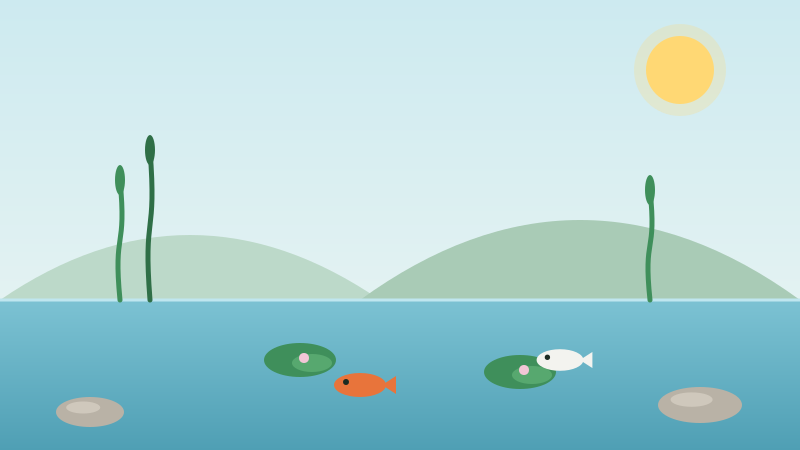
A natural pond is a closed-body of water shaped and run like a miniature ecosystem rather than a filtered swimming pool. Its clarity and health come from biology, not chemicals.
Natural vs. conventional ponds
A conventional ornamental pond relies on mechanical filters, UV clarifiers, and chemical additives to keep water clear. A natural pond instead uses a balanced food web: plants absorb nutrients, beneficial bacteria break down waste, and the water column stays clear because there is nothing left for algae to eat.
Natural pond
Driven by plants + bacteria. Minimal equipment. Supports wildlife. Slightly "living" water tint acceptable.
Koi / formal pond
Fish-first, high bioload. Heavy filtration and often sterile. Crystal clarity but人工 maintenance.
Wildlife pond
No fish or few. Maximum biodiversity. Shallow shelves and native planting. Calm, still water.
Swimming pond
Hybrid: a deep swim zone plus a separate regeneration (plant) zone that filters the water.
The four pillars of a natural pond
- Containment — a liner or natural clay bowl that holds water without leaking.
- Circulation — moving water delivers oxygen and prevents stagnation.
- Filtration — biological and mechanical processes that remove or consume waste.
- Planting — the living engine that absorbs nutrients and hosts beneficial life.
- New to ponds? Read 01–04 first.
- Ready to dig? Jump to 05–08.
- Want life and wildlife? 09–12.
- Keeping it alive? 13–14.