11 · Wildlife & Biodiversity
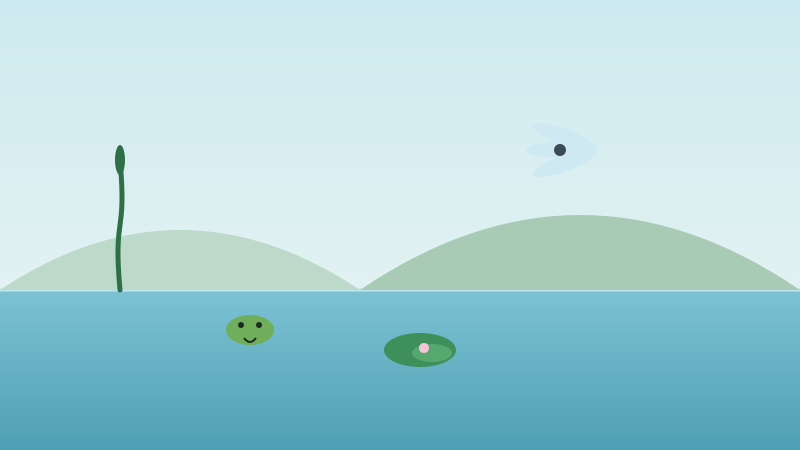
A natural pond is a magnet for life — frogs, dragonflies, newts, birds, and pollinators. Here is how to welcome them responsibly.
Make it accessible
- A graduated beach or ramp lets amphibians and small mammals enter and leave safely. Vertical liner walls are death traps.
- Place flat stones at the water's edge as basking spots for dragonflies and frogs.
- Leave a "wild" buffer of unmown grass around part of the pond.
What you'll attract (and want)
| Creature | Role | How to encourage |
|---|---|---|
| Frogs & toads | Eat insects, including mosquitoes | Shallow shelves, no fish, native marginals |
| Dragonfly nymphs | Voracious mosquito larvae predators | Still water, emergent stems to climb |
| Daphnia / water fleas | Graze suspended algae | Unfiltered corners, no fish pressure |
| Birds & hedgehogs | Joy + pest control | Fresh water, safe exit ramp |
Mosquito myth
A moving, stocked, planted pond actually reduces mosquitoes. Dragonfly nymphs and fish eat the larvae. Only stagnant, sunlit puddles breed them. Keep circulation on.
Avoiding problems
- Don't introduce non-native crayfish or bullfrogs — they outcompete everything.
- Keep cats away from breeding amphibians with planting cover.
- Resist the urge to "tidy" — a little leaf litter and stem cover is habitat, not mess.