22 · Waterfalls, Streams & Spillways
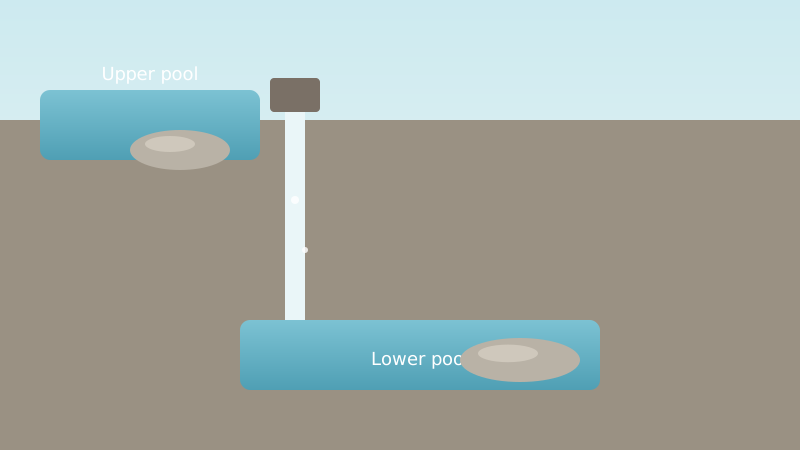
Moving water is both beautiful and functional: a waterfall is one of the best aerators you can build. The secret is a level weir and tidy liner folds.
Design basics
- A wide, low weir (spillway) aerates more than a tall thin fall. A 10 cm drop over 60 cm width beats a 60 cm drop over 10 cm.
- Plan the stream on paper first; keep it visible from seating areas.
- Every liner fold must be tucked and weighted so water cannot sneak behind it.
Leveling the weir
Use a spirit level — an uneven lip sends water to one side and looks broken. Build the weir from a solid, level stone or a purpose-made weir box, then pack gaps with foam or silicone-safe sealant.
Liner and rockwork
- Line the entire stream bed with EPDM + underlay, extending well past the banks.
- Create pools at each step so water does not free-fall onto bare liner (which erodes and looks unnatural).
- Set rocks so they hide the liner edge; secure with a little spray foam underneath to stop shifting.
- Backfill behind rocks with soil so the stream reads as part of the landscape.
Pump sizing for lift
required_flow = visual_desire + head_penalty
Total head = vertical lift + ~0.3×pipe_length + friction from bends
Read the pump curve at YOUR head, not the box headline.
Common leaks
- Water escaping behind the liner at the top edges — fix by extending/weighing the liner.
- Perforated liner from sharp rock — always use underlay.
- Undersized pump causing trickle instead of sheet — increase flow or narrow the weir.
Bio-film bonus
The wet stream surfaces grow a slime of beneficial bacteria that further polishes water — a stream is a filter as much as a feature.
Waterfall construction steps
- Shape the cascade during excavation — build shelves, not a smooth slope.
- Lay underlay and liner up the entire waterfall path, overlapping the pond liner by 300 mm minimum.
- Build each lip with flat stone. The lip must be perfectly level or water will channel to one side.
- Use expanding foam behind each lip to force water forward over the stone, not behind it.
- Test with a hose before backfilling. Adjust stone until water flows evenly across the full width.
Sound control
A wide, shallow cascade over flat stone makes a gentle trickle. A narrow, deep drop over rough stone makes a loud splash. Design the cascade profile to match your noise preference.