36 · Pondless Waterfalls & Disappearing Fountains
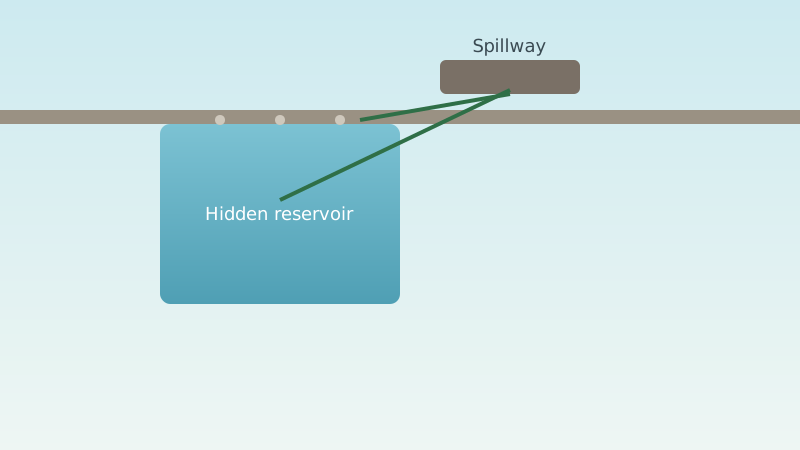
All the sound and movement of water, none of the open surface. Perfect for tight spaces, family gardens, and pure ambience.
How it works
A buried basin holds the water. A pump sends it up to a spillway or falls; the water then "disappears" into a bed of cobbles and filters back down into the hidden reservoir. No standing water means no drowning risk and almost no maintenance.
Pros & cons
| Pondless | Open pond | |
|---|---|---|
| Safety | Safe (no surface) | Needs fencing/covers |
| Wildlife | Drinking + sound only | Breeding habitat |
| Upkeep | Very low | Moderate |
| Cost | Reservoir + pump | Excavation + liner |
Sizing the basin
Match basin volume to the visible water feature. A rule of thumb: 1 L of reservoir per 30 cm of waterfall width, plus enough to cover the pump intake with margin so it never runs dry.
Construction
- Dig and line the basin; add a pump vault / mesh grate on top.
- Build the spillway or rock falls above, on a stable liner.
- Fill the area around the return with rounded cobbles so water filters through.
- Camouflage edges with plants and stone.
Pondless waterfall build steps
- Excavate a basin (the vault) at the lowest point: minimum 600 × 600 × 600 mm.
- Line the basin and waterfall path with liner and underlay.
- Place the pump in a pump vault (crate or dedicated unit) inside the basin.
- Cover the basin with a waterfall grate and build the cascade on top.
- Backfill around the basin with gravel.
- Plumb the pump to the top of the cascade.
Pondless advantages
- No standing water = no drowning risk for children.
- Maintenance is minimal: just top up evaporation losses.
- Can be built in very small spaces.
- Water disappears into gravel, creating a natural seepage effect.