40 · Beach & Swim-Entry Detailing
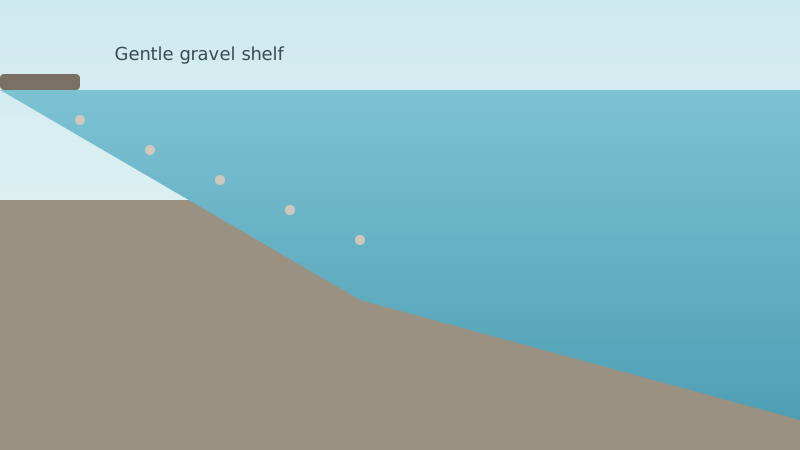
A gravel beach turns a hard edge into a soft shoreline — easier to enter, better for wildlife, and visually natural.
Why a beach?
A gently shelving gravel shelf lets you wade in, gives frogs and newts a safe entrance, and removes the abrupt liner edge that looks artificial.
Excavation
Cut a shallow slope of about 1:10 (10 cm drop per metre run) from the top edge down to about 30–45 cm depth, then steepen to the main basin. Compact the slope so gravel does not keep sliding.
Gravel selection
- Use rounded, fish-safe pea gravel (washed, no dust).
- Avoid crushed angular stone — it locks together and hurts feet.
- Keep grain 5–20 mm; finer silts cloud water.
Edging & planting
Tuck marginal plants into the beach so roots hold the gravel. Cap the top with a few flat coping stones only at high-traffic points to avoid a "built" look.
Maintenance
Beaches trap sludge. Rake and rinse the gravel each spring, and keep fish numbers modest so they do not burrow it into mounds.
Beach entry construction
- Slope the pond base gradually from 0 mm to 300 mm depth over a 1 m run.
- Lay liner and underlay over the entire sloped area.
- Cover with a 50 mm layer of washed pea gravel.
- Place larger cobbles at the waterline for a natural transition.
- Plant marginal species at the waterline to soften the edge.
Why beach entries are brilliant
- Frogs and hedgehogs can enter and exit safely.
- Children can wade in safely.
- It looks completely natural.
- Marginal plants thrive in the shallow margins.