46 · Solar & Off-Grid Ponds
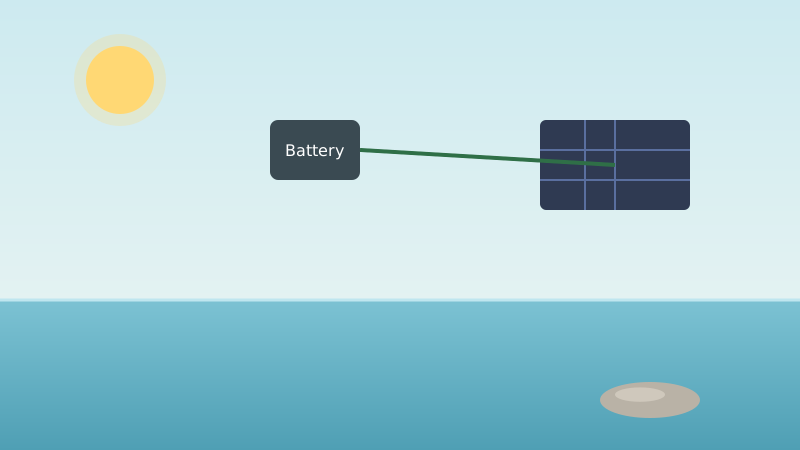
Run a pond where no power line reaches. Solar works — if you size it for the worst week, not the best day.
Feasibility
Direct-drive solar pumps only run in sun, so the pond sits still at night. For continuous circulation you need a battery and charge controller. In cloudy winters, oversize the panel or accept reduced flow.
Components
- Panel — rated above pump draw to allow for losses.
- MPPT controller — extracts max power and charges the battery.
- Battery — deep-cycle (LiFePO₄ or AGM) sized for 2–3 sunless days.
- Pump — low-voltage DC, matched to the controller.
Sizing (quick)
Estimate daily pump energy: watts × hours. Size battery to that × days of autonomy, and panel to recharge it in a full-sun day. Add 30% margin for cable loss and aging.
Reliability
Off-grid ponds die quietly when the battery fails. Add a low-battery cutout to protect the battery, and a visual Health indicator you will actually check.
Hybrid grid
The most robust setup trickle-charges the battery from mains as backup, keeping flow through long winters while still saving energy in summer.
Solar pump sizing
- Calculate required flow rate: pond volume ÷ 2 (turnover every 2 hours).
- Check the pump’s rated flow at your peak sun hours.
- Solar pumps run at full power for only 4–6 hours/day. Size accordingly.
- Add a battery if you want overnight operation.
- Position panels facing south (northern hemisphere) at an angle equal to your latitude.
Solar pond tips
- Start with a small solar pump to test the concept before investing heavily.
- MPPT controllers extract more power in partial shade.
- lithium-iron-phosphate (LiFePO4) batteries last 5–10× longer than lead-acid.
- Panel output drops 0.4% per °C above 25°C — mount with airflow behind the panel.