47 · Rainwater Harvesting & Auto Top-Up
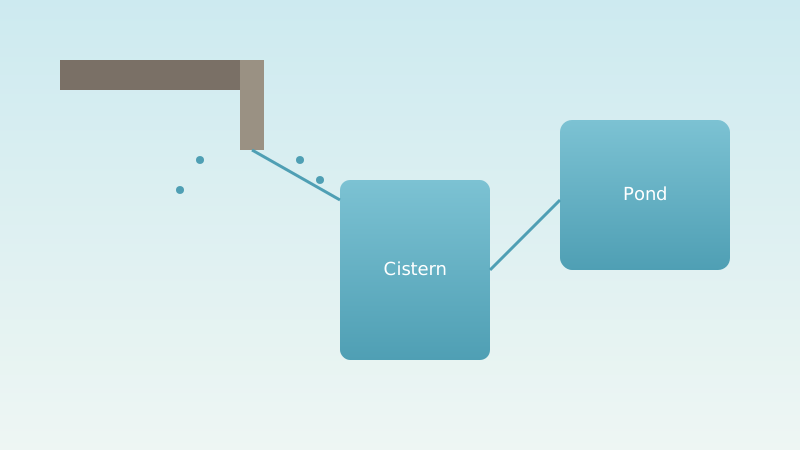
Stop hauling hoses. Catch roof water and let the pond refill itself — naturally soft and free of chlorine.
Why harvest for ponds
Rainwater is low in dissolved salts and chlorine, so it is gentler on fish and bio-filters than tap. Collecting it also reduces runoff and your water bill.
Cistern sizing
Size to cover summer evaporation (roughly 1–2% of volume per hot day) plus top-up. A 1,000 L IBC or barrel per few square metres of roof catchment is a sensible start.
First-flush & filtration
- Divert the first dirty rain (first-flush diverter) away from the tank.
- Screen leaves at the gutter and tank inlet.
- Keep the tank dark and covered to stop mosquitoes and algae.
Auto top-up
A float valve (toilet-cistern style) in a small chamber connected to the cistern keeps the pond at a set level. The chamber hides the mechanism and prevents fish from entering the plumbing. No pump needed — gravity does the work if the tank sits above pond level.
Mixing
If you must top up from tap, run it through a dechlorinator or let it stand a day; chlorine and chloramine both harm the biofilm.
Rainwater harvesting for ponds
- Install a first-flush diverter to discard the first 10 litres of runoff (carries roof debris).
- Use a header tank or water butt positioned above the pond level.
- Fit a mesh screen on the inlet to block leaves and insects.
- Connect via a float valve for automatic top-up.
- Test stored rainwater for pH (it is naturally acidic, which is fine for most pond plants).
Rainwater advantages
- Free of chlorine and chloramine.
- Naturally soft (low mineral content).
- Reduces mains water usage by 40–60%.
- Warmer than mains water in summer (less temperature shock).