53 · Pond Placement & Orientation
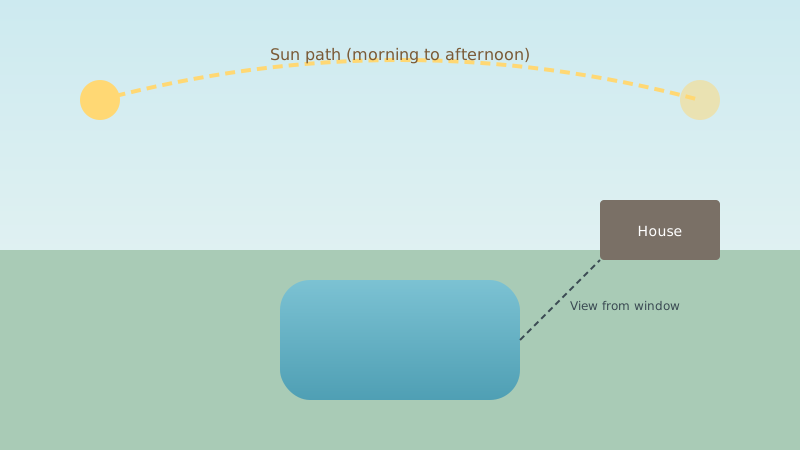
Where you put the pond matters as much as how you build it. Get the site right and half the maintenance disappears.
Sun & shade
Ideally 4–6 hours of direct sun daily. Full sun all day encourages algae; full shade starves plants and stunts fish colour. Morning sun is best — it warms the water gently and dries dew off nearby plants.
Wind exposure
Wind pushes debris into the pond and accelerates evaporation. A sheltered spot behind a hedge, fence, or building saves constant skimming. But complete stillness breeds mosquitoes — a gentle breeze is ideal.
Trees & leaf fall
- Avoid placing under deciduous trees — autumn leaf drop is the #1 maintenance headache.
- Conifers drop needles year-round and acidify water.
- Roots can puncture liners if the pond is too close (keep 2+ metres from large trees).
Views & access
Position the pond where you will see it daily — from a kitchen window, patio, or bedroom. A pond hidden in a corner gets ignored. Leave enough room around the edge for maintenance access and for sitting nearby.
Soil type
| Soil | Implication |
|---|---|
| Clay | Natural seal; unlined ponds possible if clay is 30cm+ deep |
| Loam | Needs liner; reasonably stable |
| Sandy | Drains fast; liner essential, secure edges well |
| Rocky | Liner only; protect with underlay on every surface |
Utilities & services
Check for buried pipes, cables, and drains before digging. Contact your local utility locator service. Keep the pond away from septic fields and water mains.
- Observe sun patterns for a full day. Mark sunny and shaded areas at 9am, noon, 3pm, and 6pm.
- Check wind exposure — wind cools water, increases evaporation, and blows debris. A sheltered spot with morning sun is ideal.
- Assess tree proximity — measure the distance to the nearest tree trunk. Ideal: 3+ metres for deciduous, 5+ metres for conifers.
- Check soil type — dig a test hole 300 mm deep. Clay holds water; sand drains; loam varies.
- Consider views — position the pond where you can see it from indoors.
- Check access — can you get a mini digger to the site?
- Directly under a large deciduous tree (leaves + roots = trouble).
- In a low spot where garden runoff collects (pesticides, fertilisers).
- Where reflected afternoon sun creates a “mirror” effect (overheats water).
- Where the view is of a fence, bins, or a neighbour’s window.