54 · Design Styles
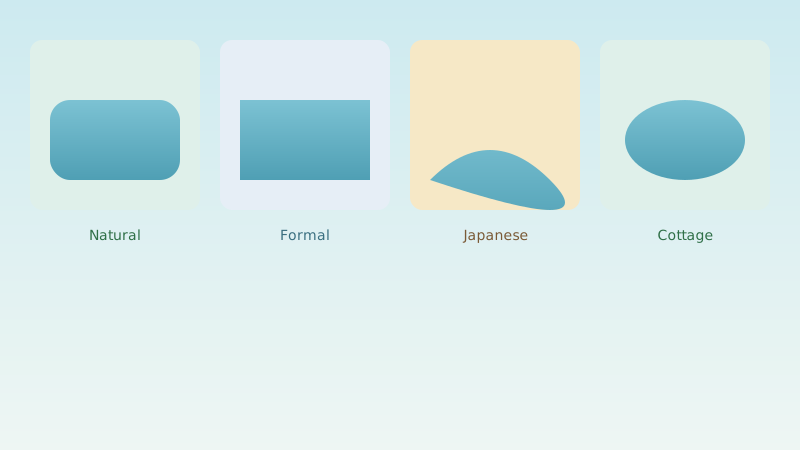
A pond is a garden feature. Its shape, edging, and planting should suit the space around it.
Natural / wildlife
Irregular curves, shallow margins, dense planting, no visible liner. Aim to look like it has always been there. Rocks, logs, and leaf litter are features, not mess. Best for biodiversity.
Formal / geometric
Circles, rectangles, or ovals with clean stone or coping edges. Often raised above ground level. Still water reflects sky and architecture. Low planting — maybe a single lily or fountain. Best for courtyards and modern gardens.
Japanese / contemplative
Asymmetry, stone, moss, and restrained planting. A tsukubai (stone basin) or shishi-odoshi (deer scarer) adds sound. Koi may be present. The surrounding garden is part of the composition. Best for quiet, meditative spaces.
Cottage / informal
Soft edges, overflowing marginals, self-seeding plants, and a slightly untamed look. A small waterfall or rill adds movement. Best for traditional or country-style gardens.
Modern minimalist
Simple geometry, dark liner or dark water surface, clipped planting (grasses, reeds), limited species. The pond is a design object, not a habitat. Best for contemporary architecture.
Mixing styles
Most gardens are a blend. The key is consistency: pick one dominant style and use the others as accents. A formal pond with wild margins works; a formal pond with a Japanese bridge does not.
- Match your garden — a formal pond looks wrong in a cottage garden, and vice versa.
- Choose one dominant style and commit. Mixing styles creates visual chaos.
- Use materials consistently — if the pond edge is slate, keep slate or wood nearby.
- Consider maintenance level — formal ponds require more precision; natural ponds are more forgiving.
- Sketch before building — draw the pond from your main viewing angle.
- Natural: Use irregular shapes, native plants, and found materials. Hide the liner completely.
- Formal: Use geometric shapes, clean edges, and symmetrical planting. Symmetry is everything.
- Japanese: Less is more. One specimen plant, one stone arrangement, raked gravel.
- Cottage: Overflowing with plants. Mix edible (watercress) with ornamental (irises).