59 · Smart Monitoring & Automation
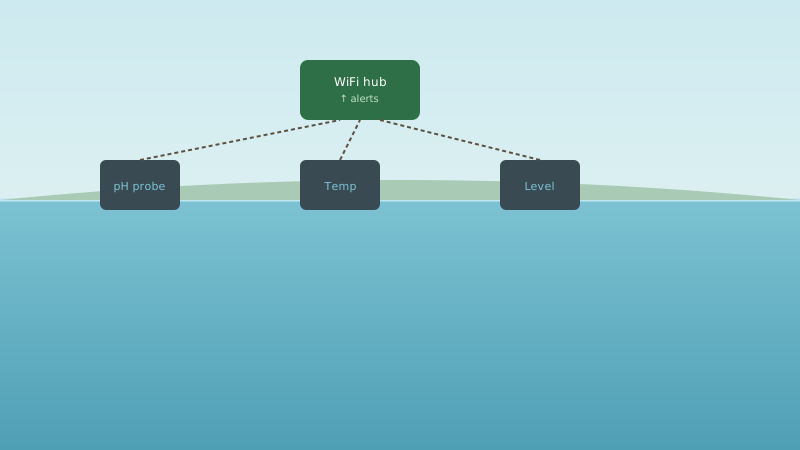
Sensors, auto-dosing, and remote alerts take the guesswork out of pond keeping.
What to monitor
| Parameter | Why | Sensor type |
|---|---|---|
| pH | Early warning of crashes | Inline or floating probe |
| Temperature | Feeding decisions, winter alerts | Submerged thermistor |
| Dissolved oxygen | Fish safety in hot weather | DO probe (advanced) |
| Conductivity / TDS | Mineral balance, pollution | TDS meter |
| Water level | Leak detection, auto-top-up | Ultrasonic or float switch |
Auto-dosing
Peristaltic pumps can add dechlorinator, beneficial bacteria, or pH buffer on a schedule. They are common in aquariums and increasingly available for ponds. Dose conservatively — over-dosing chemicals kills faster than under-dosing.
WiFi alerts
Several consumer systems (e.g., GHL, Neptune, basic Arduino setups) send phone alerts when parameters go out of range. A cheap pH/temp logger with WiFi can save a fish stock overnight.
DIY vs off-the-shelf
- Off-the-shelf — plug-and-play, supported, but expensive per parameter.
- Arduino / Raspberry Pi — cheapest per sensor, fully custom, requires coding and waterproofing.
- Hybrid — use a commercial controller for critical readings (pH, temp) and DIY for extras (water level, flow).
Common pitfalls
- Sensors drift; calibrate monthly with buffer solutions.
- Probe housings biofou; clean regularly with a soft brush.
- WiFi modules fail in damp environments; house electronics in IP65 enclosures.
- Auto-dosing can mask a bigger problem — investigate the root cause, not just the symptom.
Start simple
A £15 pH/temp test kit and a weekly routine will outperform a £500 sensor system that nobody calibrates. Technology supports good practice; it does not replace it.
Smart monitoring setup procedure
- Choose sensors: pH, temperature, and dissolved oxygen are the essentials. Level sensor is optional but useful.
- Place sensors at 300 mm below the surface, away from the pump intake and filter outlet.
- Connect to WiFi hub — ensure the hub is within range of both the sensors and your home network.
- Set alert thresholds: ammonia >0.5 mg/L, temperature >28°C or <4°C, pH outside 6.5–8.0.
- Install auto-doser (optional): connected to dechlorinator or beneficial bacteria supply.
- Test alerts by manually adjusting a sensor reading.
Smart monitoring recommendations
- Start with a basic temperature + pH sensor (£30–60) before investing in full systems.
- Use a weatherproof enclosure for all electronics near water.
- Battery-powered sensors last 6–12 months; mains-powered units are more reliable for long-term use.
- Check sensor calibration monthly — pH sensors drift over time.